Hot Pockets in the Air Fryer
Temperature
360°F
180°C
Time
13 min
turning once, checking from 11 minutes
Cook from
Frozen
no thawing
Short answer
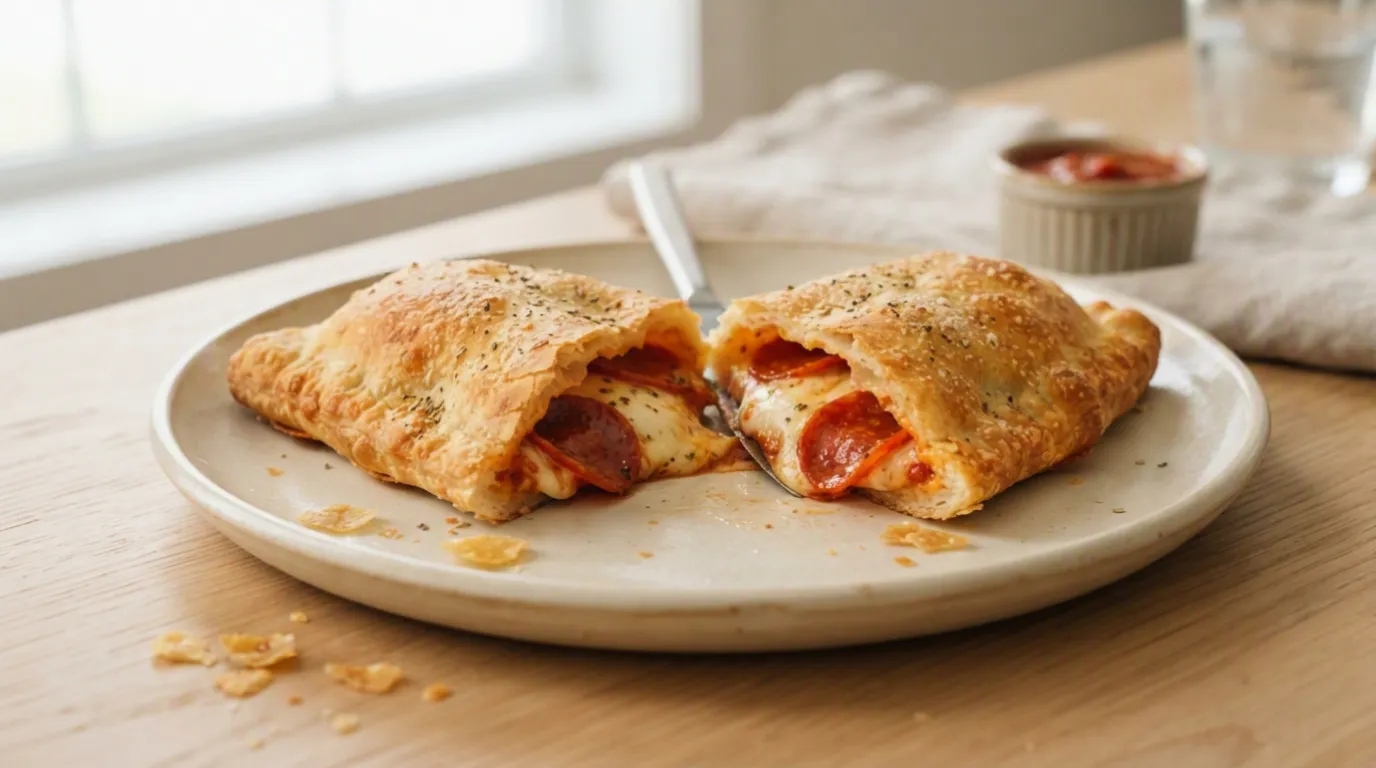
Air-fry a Hot Pocket at 360°F (180°C) for about 13 minutes from frozen, turning it once halfway. If your box still has a crisping sleeve, slide the pocket out and bin it - the sleeve is built for a microwave. It is done when the crust is evenly golden and the middle of the filling reads 165°F (74°C).
How to air fry hot pockets
What you need: 1-2 Hot Pockets sandwiches (from frozen), crisping sleeve removed if the box has one.
- Take the pocket out of the box, and out of the crisping sleeve if yours still has one - the sleeves were dropped across the brand in 2024, so a recent box will not. The sleeve does not go in the basket. There is no thawing: it goes in frozen solid.
- Sit the pocket straight on the basket or crisper plate. Two fit in most baskets side by side; leave a finger-width between them so the air can reach the sides.
- Air-fry at 360°F (180°C) for about 13 minutes, turning it over once at the halfway mark so both faces brown.
- Start checking from 11 minutes. It is done when the crust is evenly golden and firm rather than soft to the touch, and the filling in the middle - not near an end - reads 165°F (74°C), which is the minimum internal temperature Hot Pockets specify.
- Let it stand a minute or two before biting into it. The filling holds far more heat than the crust suggests, and this is the food that is famous for it.
Times written for a standard Hot Pockets sandwich - the two-per-box size, such as pepperoni pizza or ham and cheddar, in the sleeveless packaging the brand moved to in 2024. The Big & Bold sandwiches are around 50% larger and want two to three minutes more; keep the temperature at 360°F (180°C) and move the time, not the dial.
Why the air fryer suits it - and converting the box
For most of the years Hot Pockets have existed they arrived with their own cooking equipment, and what that sleeve was explains why the air fryer suits them so well. It was not packaging. It was a susceptor: card lined with plastic film metallised with a microscopically thin layer of aluminium. Microwaves pass through pastry and heat the water inside it, which is why a microwaved pocket comes out hot, pale and limp - browning needs a hot surface and a microwave has none. The metallised film absorbs that radiation instead of passing it on, gets very hot, and radiates and conducts that heat straight back into the crust. A disposable, palm-sized grill, shipped in the box because the appliance pictured on the box cannot brown anything by itself. Which is the argument for the air fryer in a line: the sleeve existed to imitate, once and imperfectly, what a basket of fast-moving hot air does natively. That argument is no longer ours to make - Nestlé dropped the sleeves across the brand in 2024, citing the millions of pounds of packaging waste they represented, by which point air fryers had already changed how a lot of people were heating these. If your box still has one it is an older box: take the pocket out and bin the sleeve. It has no microwave energy to absorb in an air fryer, it blocks the moving air that does the crisping, and loose card is light enough for the fan to lift into the element.
That leaves the question this site is built for, and Hot Pockets answers it unusually. The carton's conventional-oven method is a long, low bake on a baking sheet, and running it through the standard conversion - drop about 25°F, cut the time by a fifth - lands you well over twenty minutes at a temperature below the oven's own. That gives a pocket that is hot in the middle and pale and leathery outside. The figure that actually works is slightly hotter than the oven's and roughly half the time: 360°F for about thirteen minutes. The rule is not wrong so much as calibrated for a different shape of instruction - it assumes a box direction that is already short and hot, where most of the oven's time is going into the food. A long, low bake is not like that. A large part of those minutes is the still air of a big cavity slowly bringing the surface up to temperature at all, and that waiting is precisely what a fan deletes. The generalisation is worth carrying to other frozen foods: the longer and cooler the direction printed on the box, the more of it belongs to the oven rather than to the food, and the harder you can cut it. The sleeveless packs also print an air fryer direction of their own, which most frozen food still does not - if yours does, follow it, and treat the numbers here as the second opinion rather than the source.
What to watch for
- Golden ends and a cold middle - the commonest miss, and it is the shape rather than your machine. A Hot Pocket is a fat tube with thin crimped ends, so the ends are through minutes before the centre is. Judge it by the middle and put the thermometer there, never into an end.
- Filling escaping at the crimped seam - it has gone a couple of minutes too far, or it was turned roughly while soft. The seam is a folded crimp rather than a seal that gets stronger with cooking, so once the filling is boiling it will find the join. Pull it at golden rather than dark, and turn it with tongs, gently.
- A pale, tough crust - the sign of too low a temperature for too long, which is what a literal conversion of the box directions produces. This one wants a shortish cook at a heat above the oven figure, not a long gentle one.
- A scorched top with a frozen core in the larger sandwiches - the Big & Bold size is about half as big again, so it needs a couple more minutes rather than a hotter basket. Keep 360°F and move the clock.
Converting other frozen foods
The box usually gives oven directions and leaves the air fryer to you. Drop the temperature about 25°F and cut the time by a fifth, or use the conversion calculator - and see the cooking times chart for foods by the plateful.
Hot Pockets in the air fryer: FAQ
How long do you air fry a Hot Pocket?
About 13 minutes at 360°F (180°C) from frozen, turning it once halfway, and checking from 11. Go by the crust being evenly golden and firm rather than by the timer, and confirm the middle of the filling has reached 165°F (74°C) - the minimum internal temperature Hot Pockets specify. The larger Big & Bold sandwiches want two to three minutes more at the same temperature.
Do you use the crisping sleeve when air frying a Hot Pocket?
No - and most boxes no longer have one, because Nestlé removed the sleeves across the brand in 2024. If yours does, slide the pocket out and bin it. The sleeve is a susceptor: card lined with metallised film that absorbs microwave energy and turns it into surface heat, which is the only way a microwave can brown anything. An air fryer produces no microwave energy for it to absorb, so it does nothing useful, and it makes things worse twice over - it blocks the moving air that crisps the crust, and loose card is light enough for the fan to lift into the heating element. The packet already tells you to leave the sleeve out for a conventional oven; an air fryer is the same situation with a fan added.
Why is the middle of my Hot Pocket still frozen?
Because you are almost certainly reading the wrong part of it. A Hot Pocket is thickest in the middle and thinnest at the crimped ends, so the ends brown and heat through well before the centre does - a pocket that looks and feels done at the corners can still have a cold core. Give it the full 13 minutes, turn it halfway so neither face runs ahead, and check the temperature in the middle of the filling rather than an inch from the end. If the crust is already dark and the centre is still cool, drop to 340°F (170°C) and give it longer, which lets the heat travel inwards before the outside overshoots.
More brand-name frozen foods
See every brand on the frozen brand-name foods hub, or work out any food with the cooking times chart.