Pillsbury Biscuits in the Air Fryer
Temperature
330°F
165°C
Time
8 min
turning them at 6 minutes
Cook from
Chilled
straight from the can
Short answer
Air-fry Pillsbury biscuits at 330°F (165°C) for about 8 minutes, turning them over at 6 so both sides colour. Space them out - they roughly double in size. They are baked through when the outside is golden all over and the middle reads 200-205°F (93-96°C); a doughy centre means they need longer, not hotter.
How to air fry pillsbury biscuits
What you need: 1 can of Pillsbury Grands biscuits (8 biscuits, chilled).
- Open the can and separate the biscuits. There is nothing else to do - no oil, no egg wash, and no thawing, because these are chilled dough rather than frozen.
- Set them in the basket in a single layer with a good finger-width between them. They roughly double in size, so four Grands is a full basket in most machines; cook the rest as a second batch rather than crowding them.
- Air-fry at 330°F (165°C) for 6 minutes. Resist opening it earlier - the rise happens in the first few minutes and the draught does it no favours.
- Turn each biscuit over and cook for another 2 minutes or so, until both sides are golden. The underside starts paler than the top; the flip is what evens it out.
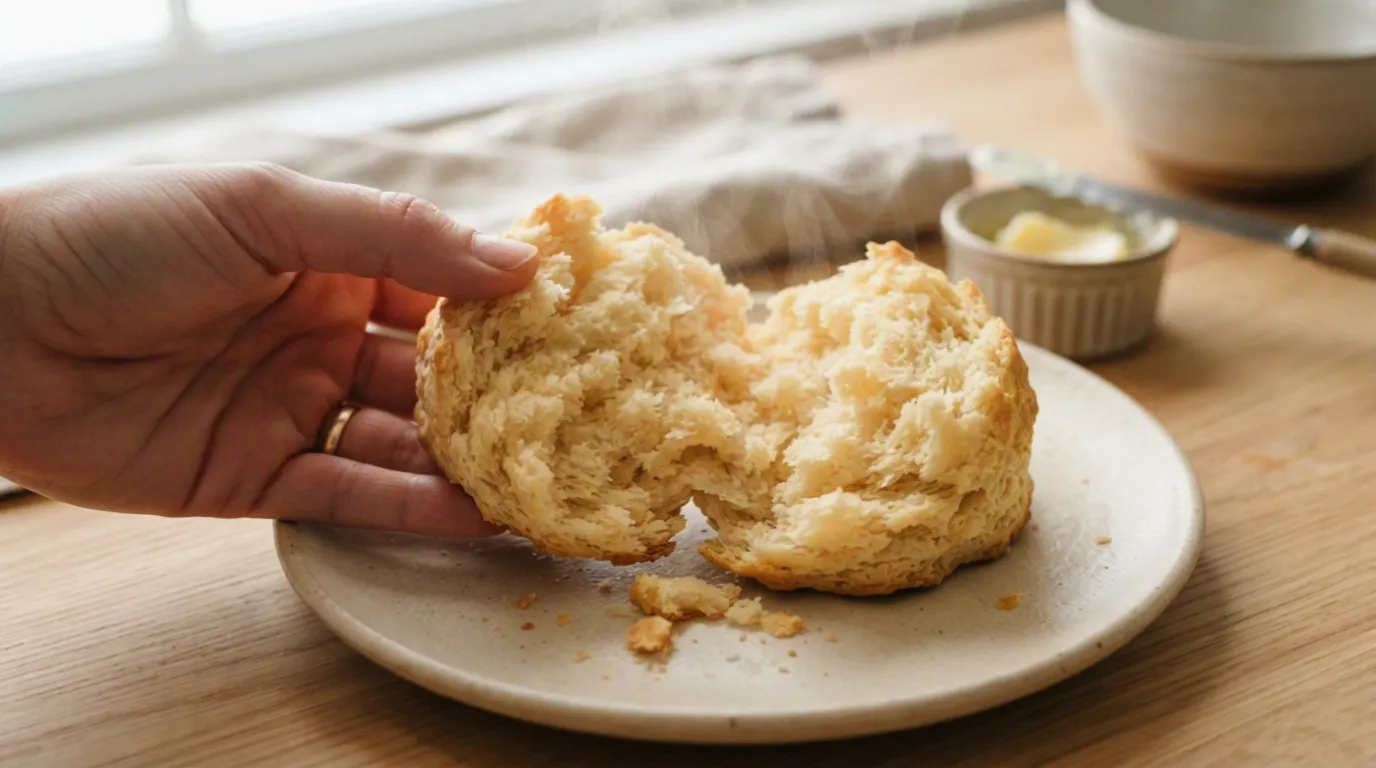
- Check the middle before serving. It should be 200-205°F (93-96°C) on a thermometer, or - failing that - pull one apart and look for a set, fluffy crumb rather than a wet, shiny one. If it is doughy, give them another minute or two at the same temperature.
Times written for a can of refrigerated Pillsbury Grands biscuits - the big pop-open can, 8 biscuits. The smaller standard biscuits are done nearer 6 minutes at the same temperature. Pillsbury also sells Grands as frozen biscuits, which are a different product with a much longer oven direction on the bag: those want around 14 minutes at 325°F (160°C), and it is worth giving them the full time even when the outside looks ready early.
Why the air fryer suits it - and converting the box
Everything else in this section is already cooked and only needs reheating. Biscuits are the exception: this is raw dough, chemically leavened, and the air fryer is doing the actual baking. That changes what can go wrong. A nugget that comes out disappointing is dry; a biscuit that comes out wrong is raw in the middle, which is worse than a texture problem - the advice on flour packets is not to eat the dough uncooked, and a pale, gummy centre means the dough never got there. So the target is not "hot", it is baked: golden all over and 200-205°F (93-96°C) in the middle, which is where a biscuit's starches have gelatinised and its structure has set. The other consequence is that the dough grows. Grands roughly double, upward and outward, so a gap that looked generous when they went in is not a gap by minute six - leave a good finger-width between them, or the sides that touch will still be pale dough when the tops are brown. And the biscuit is rising toward the heating element the whole time, which is the real reason 330°F beats the hotter settings that suit everything else on this site.
There is genuine disagreement online about which side of an air-fried biscuit browns first, and it is worth settling, because the two answers lead to opposite fixes. Some pages say the bottom burns because it sits nearest the heat, and tell you to lay parchment underneath. In a basket-style air fryer that is backwards: the element is above the basket, not below it, so the top browns first and the bottom is the side that lags. The bottom-burns advice has been carried over from an oven, and in an oven it is true - but only because the biscuit is sitting on a hot metal sheet, and the pan is browning its base by direct contact. Take the pan away and that contact goes with it. This site makes the same point on steak, where losing contact with hot metal costs the crust; on a biscuit it costs the base, and the fix is different because you can turn a biscuit over. So the underside is the weak side here, and a solid sheet of parchment under it makes the weak side weaker still by cutting off the airflow that was all it had. Turn them over at six minutes instead. The flip is not a tidying-up step - it is the substitute for the sheet pan the directions on the can were written for.
Which brings us to the can, and this one converts cleanly. Pillsbury prints oven directions and nothing else - the air fryer is not on the label - so working it out is left to you, and it is the thing this site is built for. The temperature half of the usual rule lands almost exactly: drop the oven figure by about 25°F and you arrive at 330°F, which is where these bake without the tops running ahead. The time half needs cutting much harder than a fifth, to roughly half the oven's, and that is now the second brand page here where the same thing has happened. The pattern behind it is worth carrying to other frozen and chilled foods: the longer and cooler the direction printed on the pack, the more of that time is a big oven's still air slowly bringing the surface up to temperature at all, and that waiting is exactly what a fan deletes.
What to watch for
- A brown top and a raw middle - the classic canned-biscuit failure, and it means the temperature was too high rather than the time too short. The outside of a biscuit sets long before the centre does, so heat that browns the top in four minutes cannot get to the middle in eight. Drop to 320°F (160°C) and give them longer.
- Biscuits fused together with pale, doughy sides - they were too close. Dough expands sideways as well as upward, and where two biscuits meet, that face is shielded from the moving air and never sets. It is the one mistake that cannot be corrected by cooking them for longer.
- A pale, soft underside - normal at the halfway point, a problem at the end. The element is above the basket and there is no hot pan underneath, so the bottom needs the flip to catch up. If yours are still pale after turning, give them an extra minute rather than raising the heat.
- Loose parchment lifting into the element - a real risk with light dough on a light liner, especially if you preheat. Parchment goes in with the biscuits already sitting on it, never into an empty basket, and use a perforated liner rather than a solid sheet so the underside still gets air.
Converting other frozen foods
The box usually gives oven directions and leaves the air fryer to you. Drop the temperature about 25°F and cut the time by a fifth, or use the conversion calculator - and see the cooking times chart for foods by the plateful.
Pillsbury Biscuits in the air fryer: FAQ
How long do Pillsbury biscuits take in the air fryer?
About 8 minutes at 330°F (165°C) for the big Grands, turned over at 6 minutes so both sides colour; the smaller standard biscuits are done nearer 6. Judge them by the middle rather than the clock - 200-205°F (93-96°C) on a thermometer, or a set, fluffy crumb rather than a wet one when you pull one open. If the centre is still doughy, give them another minute or two at the same temperature rather than turning the heat up.
Why are my air fryer biscuits raw in the middle?
Because they were cooked too hot, not for too short a time - which is the opposite of what it feels like. A biscuit's outside sets and browns in the first few minutes, and once the crust is dark you stop, whether or not the middle has caught up. Heat that browns the top in four minutes has not had time to reach the centre of a Grands biscuit, which is thick and made thicker by rising. The fix is to come down to 320-330°F (160-165°C) and accept a longer bake, so the heat travels inwards while the outside is still only pale gold. It is worth getting right rather than eating around: flour is not meant to be eaten raw, and a gummy, shiny centre is dough that never baked.
Do you need to flip Pillsbury biscuits in the air fryer?
Yes, and it matters more here than it does for most things in the basket. The element sits above the basket, so the top of a biscuit browns first while the bottom lags - and unlike an oven there is no hot baking sheet underneath to brown the base by contact, which is the job the flip has to take over. Turning them at about 6 minutes gives the underside its share of the direct heat, and it is the difference between an evenly golden biscuit and one that is brown on top and blond beneath. Do not try to fix a pale bottom with a solid sheet of parchment: that blocks the airflow to the side that was already the weaker one.
More brand-name frozen foods
See every brand on the frozen brand-name foods hub, or work out any food with the cooking times chart.