Air Fryer Smells Like Plastic
On a machine out of the box this is expected and harmless. On a machine you have used for a year it is a warning. The difference is entirely about how old it is.
6 min read Last updated
Short answer
If it is new, that is normal
A new air fryer smells of plastic because manufacturing residue is burning off the element and housing. Run it empty at 400°F for 15-20 minutes with a window open, twice, and it goes. On a machine that is not new, the same smell means something is actually melting - and that one you need to find.
The only question that matters: is it new?
This is one of those problems where the same symptom has two completely different meanings, and the thing that decides between them is not the smell - it is the age of the machine. Get that straight first and the rest of the page follows.
New machine
Expected. Not a fault. Residue burning off. Two empty runs and it is gone.
Machine you have used for months
Not normal. Nothing on a working air fryer smells of plastic once it is broken in. Something is melting. Go and look.
A brand-new air fryer
Almost every air fryer does this, and almost every manual mentions it in a line nobody reads. The machine leaves the factory with a film of protective oil on the metal to stop it corroding in a shipping container, solvents left over from the non-stick coating on the basket, and various plastics and adhesives in the housing that have never been hot before. The first time the element goes to 400°F, all of that gets its first proper heating - and what you smell is those residues volatilising.
It is the same break-in smell you get from a new oven, a new toaster or a new hair dryer, for exactly the same reason. It is finite: there is only so much residue, and once it has burned off there is no more of it. That is the useful test. Break-in smell gets weaker with every run. A fault does not.
The burn-off run
Do this before you cook anything in a new machine, not after you have ruined a batch of chips with it.
- Wash the basket, crisper plate and drawer in hot soapy water, and dry them properly. This alone removes a fair amount of the coating residue, and it is the only part of the machine you can actually wash.
- Put them back in, empty. Nothing in the basket - no oil, no liner, no lemon.
- Open a window or turn the extractor on.
- Run it at around 400°F (200°C) for 15-20 minutes.
- Let it cool, then do it once more if you can still smell anything.
On the lemon trick
The popular advice to run half a lemon, or a splash of vinegar, in the basket does work - but be clear about what it is doing. It masks and neutralises the smell that is left. It does not make the residue burn off any faster. Do the empty runs first; use the lemon afterwards if the ghost of the smell is still hanging around.
If it is still going strong after three or four cycles, stop treating it as break-in. That is no longer a finite residue burning off, and the next section applies.
An air fryer that is not new
There is nothing on a broken-in air fryer that should smell of plastic. If yours does, something that is not supposed to be hot is getting hot. In rough order of likelihood:
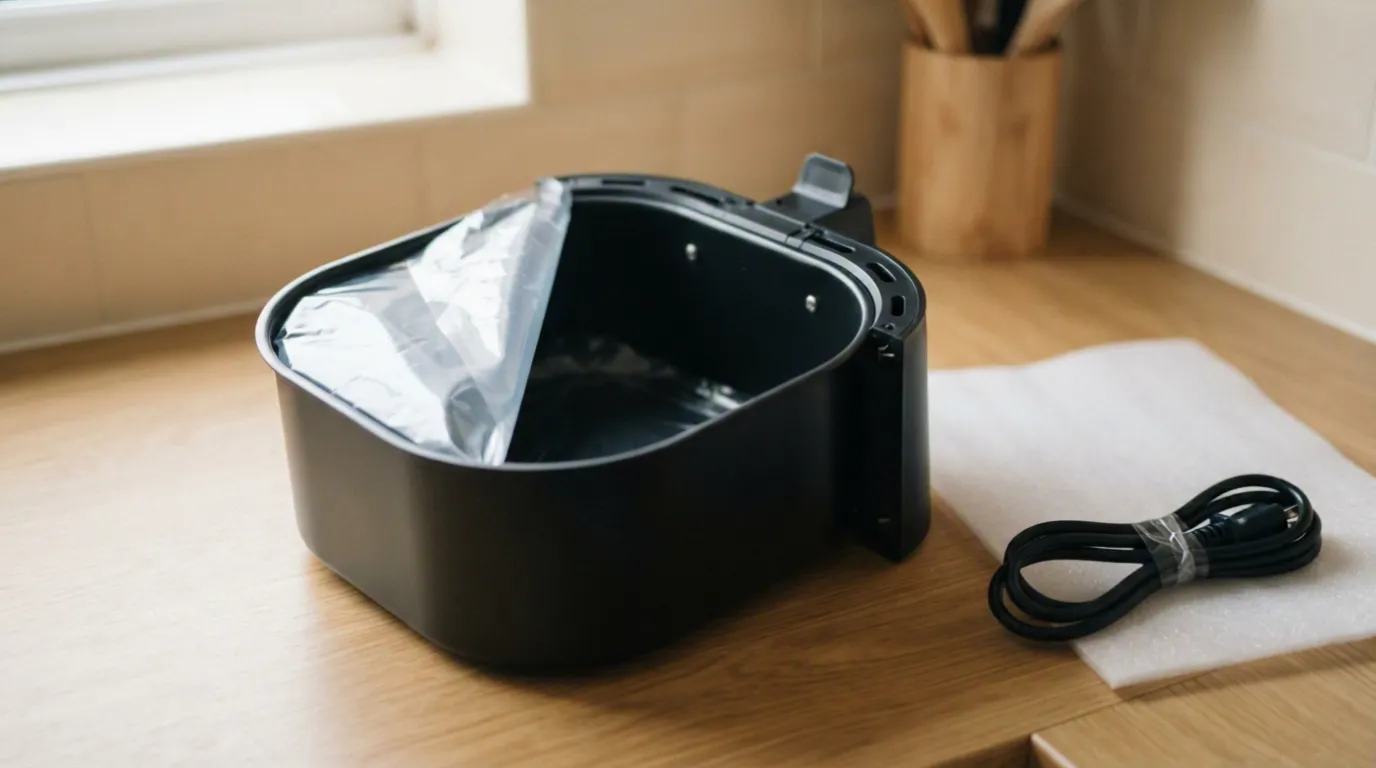
- A liner welded to the element. By far the most common. A sheet of parchment, a piece of foil, or the plastic film off a ready meal gets lifted by the fan, pinned against the element and fused there - and then scorches every time the machine heats, long after the cook it came from. Unplug the machine, let it cool, turn it upside down and look at the element. It is usually obvious, and it usually peels off.
- A plastic or silicone accessory left inside. A silicone liner, a plastic clip, a bag tie. Easy to leave and easy to forget.
- The non-stick coating breaking down. On a cheap basket that has been run empty at high heat, or scoured back to bare metal in patches, the coating itself can start to degrade. If the basket is visibly flaking or blistered, retire it - see are air fryers safe for what that coating actually is and when it stops being fine.
- Something electrical. If the smell is sharp and acrid rather than plastic - closer to burnt hair or ozone than to a melted bag - and especially with any dark smoke, that is not cooking. Unplug it at the wall and stop.
The line to hold
Break-in smell fades run by run. A melting-something smell does not, and it comes with the machine getting hot in a way it did not before. If a smell is getting worse rather than better, do not cook through it and hope.
If it smells of food, not plastic
A different complaint that lands people on the same search: the machine reeks, but of last week's fish rather than of a polymer. That is grease, and specifically grease that is not where you have been cleaning.
Fat is aerosolised by the fan and lands on the heating element, where it carbonises. It then goes rancid, and it is reheated every single time you run the machine - which is precisely why the smell survives you washing the basket, and why it transfers into food that has nothing to do with it. The element is not a part most people have ever looked at, let alone cleaned.
Unplug it, let it cool, turn it upside down and wipe the element with a damp cloth and a soft brush. Full method in how to clean an air fryer, and if it is smoking as well as smelling, that has the same root cause.
Frequently asked
Why does my air fryer smell like plastic?
If it is new, because it is new. Manufacturing leaves protective oils, machining residue and coating solvents on the element and the housing, and the first few heat cycles burn them off - a chemical, plastic-ish smell that fades after two or three uses and is not a fault. If the machine is not new, the smell means something is genuinely melting, and that is worth stopping to find.
How do you get the plastic smell out of a new air fryer?
Run it empty. Wash the basket, crisper plate and drawer in hot soapy water and dry them, then put them back, open a window, and run the machine empty at around 400°F (200°C) for 15-20 minutes. Let it cool and repeat once if the smell is still noticeable. Some people run half a lemon or a little vinegar in the basket afterwards, which helps mask what is left but does not speed up the burn-off itself.
Is the plastic smell from a new air fryer toxic?
The residue burning off a new machine is not considered a health risk in a ventilated kitchen, and it stops after a couple of cycles - this is the same break-in smell a new oven or a new toaster gives you. Open a window, run it empty before you cook in it, and do not stand over it breathing the fumes. If the smell is strong, persistent, or still there after several cycles, stop treating it as break-in and treat it as a fault.
My air fryer is not new and smells like plastic - what is melting?
Most often a liner or a bag: a piece of parchment or a plastic wrapper that got sucked up against the element and welded there, and now scorches every time the machine heats. Look at the element itself. Beyond that, check for a silicone or plastic accessory left inside, a cheap non-stick coating breaking down from overheating, or - if it smells sharp and electrical rather than plastic - wiring. That last one is not a smell to cook through.
Why does my air fryer smell of the last thing I cooked?
That is a different problem, and it is grease rather than plastic. Fat splattered onto the heating element and left there goes rancid and reheats every cycle, which is why fish turns up in the cookies. Washing the basket does nothing for it, because the smell is not on the basket. Unplug the machine, turn it upside down and wipe the element.
Can you cook in an air fryer that still smells of plastic?
Wait until the smell has gone. Not because a single cook would harm you, but because whatever is coming off the element goes straight into your food - a break-in smell will taint the first thing you cook, and it is a waste of a good dinner. Two empty cycles cost you half an hour and solve it properly.