11 Common Air Fryer Mistakes to Avoid
Almost every "my air fryer is useless" complaint comes down to one of these. None of them are your fault - the manuals barely explain any of it. Whether it is your first time or your hundredth, here is what is going wrong and how to fix it.
8 min read Last updated
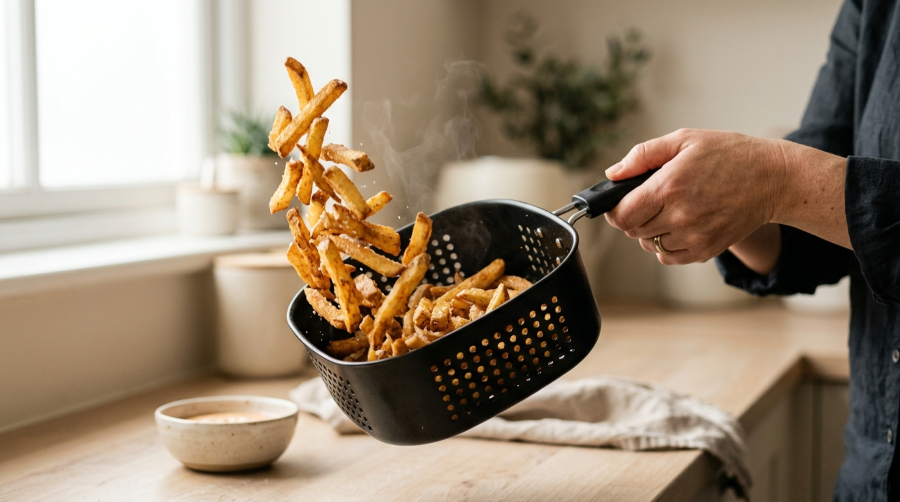
Nearly every "my air fryer is useless" complaint traces back to one of a handful of fixable mistakes - and none of them are really your fault, because the manuals barely explain any of this. Think of this as the air fryer dos and don'ts no one handed you when you unboxed it: just as useful on your first cook as on your hundredth. Here are the eleven that come up most, and the simple fix for each.
1. Overcrowding the basket
The number one mistake by a mile. An air fryer crisps by moving hot air around every surface; pile the food up and the pieces in the middle steam in their own moisture and come out pale and limp. Fix: cook in a single layer with gaps. Two roomy batches beat one crammed one every time - reheat the first batch for a minute at the end to bring it back to temperature.
2. Skipping the preheat
Putting food into a cold basket lets the surface warm up slowly and sweat out moisture before it ever starts to crisp - and the cold basket itself pulls heat back out of the underside. Fix: run the machine at your target temperature for 2-3 minutes first, with the basket left in. It barely costs any time and makes a real difference to browning, especially for fries and breaded foods. Full detail in how long to preheat an air fryer, including the cooks where skipping it costs you nothing.
3. Too much oil - or none at all
No oil on fresh vegetables or hand-cut fries leaves them dry and leathery; too much oil pools, smokes, and makes things greasy. Fix: a thin, even film - ideally tossed in a bowl or applied with a pump mister, not a heavy spray. Naturally fatty foods like wings and sausages need almost none.
4. Never shaking or flipping
The face resting on the base gets less airflow and browns less, so food cooked and left untouched comes out patchy. Fix: shake the basket or turn larger pieces once or twice through the cook. Set a halfway timer until it becomes a habit.
5. Using the wrong temperature
Cranking everything to maximum scorches the outside of thick foods before the middle is done; cooking everything low leaves it pale. Fix: match the heat to the food - high for thin, crispable items, moderate for thick things that need to cook through, and a moderate-then-high two stage approach for anything that needs both. Our temperatures guide breaks this down.
6. Lining the basket wrong
A sheet of parchment or foil covering the whole base blocks the airflow through the perforations - the very thing that makes an air fryer work - and loose liner can lift into the heating element and catch. Fix: use perforated liners made for air fryers, only under the food, always weighed down, and never during a preheat.
The rest, quickly
- 7. Guessing doneness on meat. Time is a guide, not proof. Use an instant-read thermometer for poultry, pork, fish and burgers - the safe internal temperature is the only real test.
- 8. Cooking smoke from fatty foods. Bacon, sausages and burgers drip fat onto the hot element. Add a tablespoon of water to the drawer below the basket to stop it smoking - and if it smokes with an empty basket, the problem is the machine, not the food: see why is my air fryer smoking.
- 9. Spraying aerosol oil into the basket. The propellants in cheap spray cans can degrade the non-stick coating. Use a refillable mister or toss food in oil instead.
- 10. Letting frozen food thaw first. Frozen foods are designed to cook from frozen; thawing them adds surface moisture that steams instead of crisps. Straight from the freezer is right.
- 11. Never cleaning the basket properly. Baked-on grease smokes and taints flavor. Let the basket cool, then wash it after each use - and once a month wipe the heating element, which is the part nobody cleans and the part that causes the trouble. Full method in how to clean an air fryer.
Fix these and an air fryer goes from frustrating to the appliance you reach for most nights. When you want the exact settings for a specific food, the cooking times chart and the conversion calculator have them.
Frequently asked
What are the most common air fryer mistakes?
The big ones are overcrowding the basket, skipping the preheat, using too much or too little oil, never shaking or flipping the food, and using the wrong temperature for what you are cooking. Lining the basket so it blocks the airflow, guessing doneness instead of using a thermometer, and never cleaning out baked-on grease round out the list. Fix those and most air fryer disappointments disappear.
Can you put aluminum foil or parchment in an air fryer?
Yes, but with care. Weigh it down with food so it cannot blow into the heating element, never block more than part of the perforated base (the airflow through those holes is the whole point), and never preheat with loose liner inside. Perforated parchment liners made for air fryers are the safest option.
Can you use aerosol cooking spray in an air fryer?
Better not to, and it is the propellants rather than the oil that are the problem. The solvents and lecithin in cheap aerosol cans leave a sticky film that bakes onto non-stick coating, goes browner with every cook, and will not wash off - so the basket you were protecting ends up worse than if you had used nothing. Toss the food in oil in a bowl, or use a refillable pump mister, which sprays the oil and nothing else.
Do I need to flip food in an air fryer?
For most things, yes. The airflow is strong but the side resting on the base browns less, so flipping or shaking once or twice gives even color and crispness. Foods cooked in a single open layer of small pieces benefit most.
Should you thaw frozen food before air frying it?
No - cook it straight from the freezer. Frozen foods are formulated to go into the heat frozen, and thawing them first only puts a film of surface water on them, which steams instead of crisping. The one thing to do is separate any pieces that have frozen together, so the air can reach all of them.