How to Get Crispy Results
Crispiness is not luck. It comes down to moisture, airflow and a thin coat of oil - get those three right and almost anything crisps up. Here is the playbook that works.
7 min read Last updated
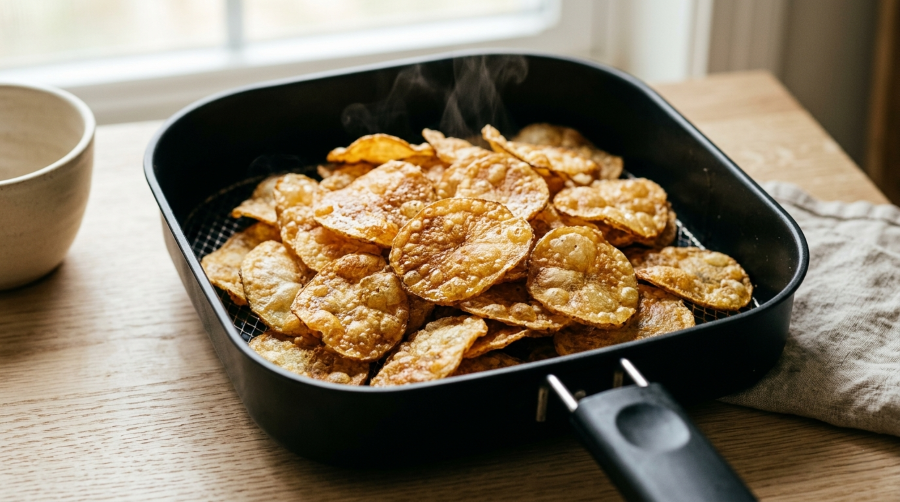
The whole reason to own an air fryer is crunch, so soggy results feel like a betrayal. The good news is that crispiness is not luck or a better machine - it comes down to three things: moisture, oil and airflow. Manage those and almost anything crisps up. Here is how, in the order that matters.
Why food goes soggy
Crisping is really just rapid drying of the surface followed by browning. Anything that keeps the surface wet stops it. The two big culprits are trapped steam - too much food in the basket releasing moisture faster than the fan can clear it - and a wet surface going in. Fix the moisture and you have fixed most of the problem before you have even thought about temperature.
Step 1: get it dry
Pat everything dry before it goes in - chicken skin, fish, washed vegetables, anything that has been marinating. For fries cut from fresh potato, go further: soak the cut fries in cold water for half an hour to pull out surface starch, then dry them thoroughly. It sounds fussy, but the difference between damp and properly dried fries is the difference between pale and shatteringly crisp. Frozen foods are the exception - they are designed to go in straight from the freezer, and letting them thaw makes them worse, because the meltwater steams them.
Want them extra crispy? After drying, toss the fries in a teaspoon of cornstarch - or a little plain flour - before the oil. It forms a thin starch shell that fries up shatteringly crisp and holds the crunch longer. The same trick works on tofu and chicken pieces.
Step 2: a little oil, in the right way
Oil helps heat spread evenly across the surface and carries browning, but the amount and method matter. You want a thin, even film, not a puddle. A pump oil mister is the best tool - it coats evenly with a fraction of what you would pour - and you should toss the food in oil in a bowl, not spray it in the basket, where aerosol oils can gum up the non-stick coating over time. Naturally fatty foods (wings, sausages, well-marbled meat) render their own fat and need almost none.
Which oil? Use one with a high smoke point so it browns rather than burns at air-fryer temperatures. The best oils for an air fryer are avocado, light or refined olive, vegetable, sunflower and rapeseed (canola) - all happy past 400°F (200°C). Skip extra-virgin olive oil and butter, which smoke and turn bitter at crisping heat. For a once-and-done answer, refillable avocado oil in a mister covers almost everything.
Step 3: give it room
This is the one almost everyone breaks. Air fryers crisp by moving hot air around every surface, so food needs space and contact with the perforated base. Pile it up and the pieces in the middle steam in their own moisture and never brown. Cook in a single layer with a little gap between pieces. If that means two batches, do two batches - the first can rest on a rack (not a plate, which traps steam) and get a 1-2 minute reheat at the end. A crowded single batch is always worse than two roomy ones.
Step 4: heat and airflow
Now temperature does its part. Preheat for 2-3 minutes - with the basket left in, so the metal touching the food is hot too - and the surface starts crisping on contact rather than slowly warming and sweating. Cook thin, crispable foods hot - around 400°F (200°C) - and shake or turn the basket once or twice so every face gets exposed to the airflow and the bits resting on the base get their turn up top. For thick foods that need to cook through, use moderate heat first, then a short blast at 400°F+ at the end to crisp the outside without overcooking the middle.
One unglamorous thing worth checking if crispness has been getting worse rather than never working: the crisper plate. Baked-on grease closes up the perforations, and those perforations are the airflow - so a dirty basket quietly throttles the one mechanism this whole page depends on. A proper clean restores more crunch than most people expect.
Crisping specific foods
- Fries: soak, dry hard, light oil, single layer, 400°F (200°C), shake twice. See the frozen fries and sweet potato fries settings.
- Chicken wings: pat very dry, skip the oil, a touch of baking powder in the seasoning helps the skin blister. Full settings here.
- Bacon: lay the rashers flat with no overlap, no oil at all, and pour off the rendered fat halfway. Overlapping strips steam each other - that is the usual reason bacon is not crisp.
- Fish: pat very dry and give it a thin flour or breadcrumb coat with a light oil spray; a wet, bare fillet will go soft, not crisp.
- Tofu: press out the water for 15-20 minutes, then toss in cornstarch and a little oil. Unpressed tofu is too wet to ever crisp.
- Vegetables: dry, toss in oil, do not crowd. Dense ones (potato, carrot) crisp; watery ones (zucchini, peppers) char rather than crunch - that is normal.
- Frozen food: cook straight from the freezer in a single layer and shake often - do not thaw first, and do not pile it up, or the meltwater steams it soft.
- Reheating to re-crisp: leftovers come back crisp at moderate heat in a single layer far better than in a microwave - see reheating fries.
Dry surface, thin film of oil, single layer, hot and shaken. Get that sequence right and the rest is just which numbers to use, and the cooking times chart has those.
Frequently asked
Why is my air fryer food soggy instead of crispy?
Almost always one of three things: the basket is overcrowded so the food steams instead of crisping, the surface was wet when it went in, or there was no oil at all. Cook in a single layer, pat food dry, and add a light spray of oil and most sogginess disappears.
Do you need oil to get crispy results in an air fryer?
A little, yes. A fine spray of oil helps the surface conduct heat evenly and brown, especially on fresh vegetables and home-cut fries. You need far less than frying - a teaspoon or two misted over the food - and naturally fatty foods like wings or sausages need almost none.
Should I preheat the air fryer for crispiness?
Yes. Putting food into an already-hot basket starts crisping the surface immediately instead of letting it warm up slowly and release moisture. A 2-3 minute preheat makes a noticeable difference, particularly for fries and anything breaded.
What is the best oil for an air fryer?
Any oil with a high smoke point that can take 400°F (200°C) without burning - avocado, light or refined olive, vegetable, sunflower or rapeseed (canola) oil all work well. Avoid extra-virgin olive oil and butter, which smoke and taste bitter at crisping heat. A fine spray of one of these is all you need for crisp results.